
When Motivation Fades, Structure Carries You Forward: February 2026
When Motivation Fades, Structure Carries You Forward: February 2026
📣 A Note From Zach
January is loud.
It’s full of optimism, new plans, fresh energy, and bold intentions.
February is quieter. Colder. Less exciting.
And that’s exactly why it matters.
February is where intentions get tested.
It’s the month that reveals whether January was built on systems… or just motivation.
Life shows back up — work deadlines, family needs, long days, low energy.
Without structure, drift is almost inevitable.
At Growth Horizons Wealth Management, February is often where we see the difference between people who hope for progress and people who design for it.
Why February Matters More Than Most People Realize
Most people don’t abandon their goals in February because they don’t care.
They drift because progress was built on motivation instead of structure.
Here’s the pattern we see again and again:
Motivation fades
Systems remain
Defaults matter more than willpower
If progress requires you to “feel like it,” it won’t last.
If progress is built into your environment, calendar, and automations — it continues even when energy is low.
February quietly rewards consistency, not intensity.
What Strong Financial Structure Actually Looks Like
For high earners and business owners, financial stress rarely comes from a lack of income.
It comes from fragmentation.
Accounts spread across platforms.
Tax decisions made reactively.
Investments managed in isolation.
Real estate treated as a side project instead of part of the plan.
Strong financial structure isn’t about complexity — it’s about coordination.
That usually means:
Cash flow systems that work automatically
Investments aligned across accounts, not manager by manager
A proactive tax strategy instead of year-by-year decisions
Real estate integrated into the broader picture
Fewer ad-hoc moves, more intentional tradeoffs
When structure is clear, decision-making gets lighter.
Client Planning in Action: From Busy to Coordinated
Recently, we began working with a new client who was doing many of the “right” things — strong income, diversified investments, real estate exposure, and disciplined saving — yet still felt unsettled.
The issue wasn’t effort or intelligence.
It was fragmentation.
Their investments were spread across multiple platforms and managers, each operating in isolation. Tax planning felt reactive rather than strategic. Real estate decisions were being made without a clear view of how they fit into the broader plan.
What this person told us:
“Tax loss harvesting isn’t a strategy — it’s a tactic. I want to know how all of this fits together.”
Our work together started by stepping back and looking at everything as one integrated household balance sheet, rather than a collection of separate accounts.
From there, we focused on:
Coordinating investments across all accounts
Building a proactive tax strategy instead of year-by-year decisions
Integrating real estate into the long-term plan rather than treating it as a side project
The result wasn’t a dramatic overhaul — it was clarity.
Clear priorities.
Clear tradeoffs.
And confidence that each financial decision supports the bigger picture.
That’s what coordinated planning is designed to provide.
*This example is provided for illustrative purposes only and does not represent the experience of all clients. Client experiences are not indicative of future results. Details have been generalized to preserve client confidentiality.
Personal Reflection
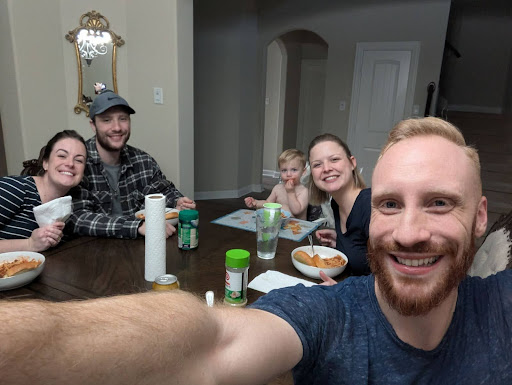
This January also brought a winter storm that had our family improvising at home for several days.
With a one-and-a-half-year-old who is high-energy and very social, being stuck inside quickly became an exercise in creativity, patience, and teamwork. It was a small but meaningful reminder that structure matters — and flexibility does too.

Those quieter days created unexpected space to think and reflect.
They also created space to work on a few long-term projects that have been slowly taking shape behind the scenes.
Which reminds me — I currently have three book manuscripts in progress, and the goal is to have at least one published this year. More to come on that soon.
At a certain point in life, progress becomes less about capability and more about control — control over time, energy, and attention.
That same principle applies to your financial life.
If you don’t design your environment, something else will.

February Planning Reminders
Organize tax documents as W-2s and 1099s arrive
Confirm estimated tax payments if applicable
Review cash flow after January spending
Check that automations are working as intended
Remember: IRA & HSA contributions for last year remain open until April 15
February is the moment to stabilize before the year speeds up again.
A Final Thought
Henry David Thoreau captured this tension perfectly in Walden:
“It is not enough to be busy; so are the ants. The question is: What are we busy about?”
Good planning isn’t about doing more.
It’s about aligning your time, energy, and resources with what actually matters.
If this season has surfaced friction, fatigue, or uncertainty, that’s not a sign you’re behind — it’s a signal worth paying attention to.
And if you’d like help thinking through what structure could look like for you, we’re always happy to start with a conversation.

*Growth Horizons Wealth Management does not provide legal or tax advice. Individuals should consult with their tax or legal professionals regarding their specific situation.